Humanoid Automation: Tesla's Robot Production Ramps Up
Tesla has begun mass-producing Optimus robots at its Fremont factory, aiming to deliver the first commercial units by the end of next year.
By Dmitri Sokolov ·
Ten thousand to twenty thousand robots will soon serve as a self-teaching academy for Tesla’s new humanoid model. This internal training system is designed to compensate for the lack of a massive existing fleet of Optimus units. It allows the machines to learn from one another and improve their capabilities rapidly without needing millions of deployed units in the field.
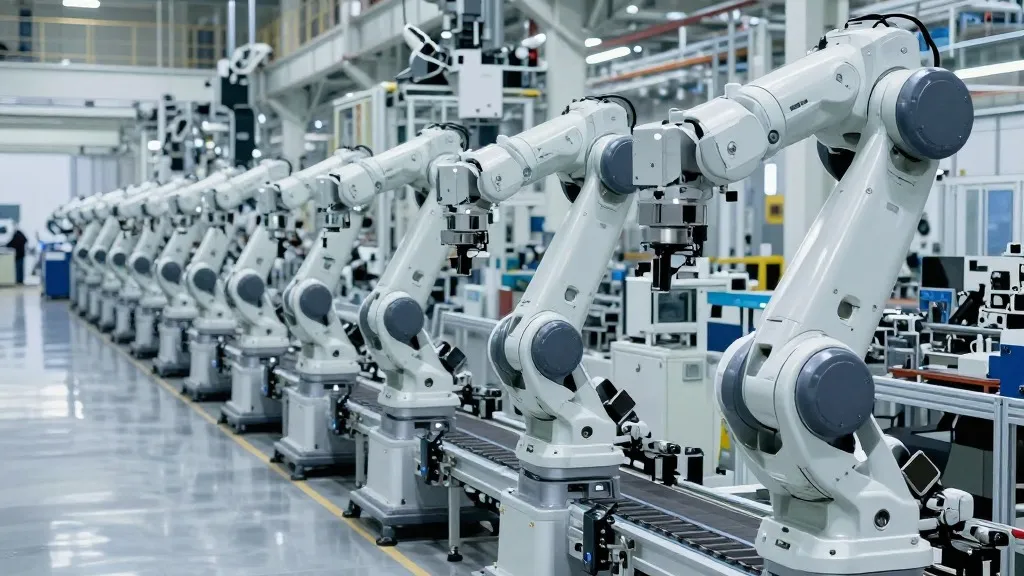
The production of these machines has moved from prototype stages to a high-volume manufacturing line. This facility is located inside Tesla’s Fremont factory. The space previously housed the assembly lines for the Model S and Model X vehicles. Tesla cleared out the old car production equipment in just forty-six days this spring. The new line is built to handle up to one million robots per year.
The transition to this new manufacturing process was a significant logistical undertaking. The company confirmed that the current process is suitable for creating a commercial product. This marks a shift from experimental builds to standard, repeatable production. The goal is to create a reliable, durable machine that can function in real-world environments rather than just controlled settings.
Elon Musk outlined the production timeline during the third-quarter earnings call. He stated that most of the necessary equipment for high capacity is already installed at the Fremont plant. Output is expected to climb steadily toward roughly twenty thousand robots per week. This ramp-up follows a classic S-curve trajectory, starting with a slow initial slope before accelerating.
Musk explained that the early stages of this growth will be gradual. The team is currently focused on refining several key areas. These include the robot’s artificial intelligence, electromechanical design, and overall reliability. The goal is to finalize these components by the end of next year. Once these refinements are complete, Tesla plans to begin delivering units to outside companies.
The primary use case for these early deliveries involves dangerous, repetitive, and around-the-clock jobs. These are tasks that are often difficult or risky for human workers. By deploying robots in these specific niches, Tesla aims to prove the value of the technology in practical, industrial applications. This approach allows for real-world testing in controlled, high-need environments.
The training methodology for Optimus differs significantly from Tesla’s automotive AI strategy. Cars rely on data from millions of vehicles driving on public roads. Optimus does not have this vast network of deployed units to gather training data. Therefore, the company created the Optimus Academy. Every robot that comes off the production line feeds its operational data back into the central AI model.
Hardware upgrades are also part of the immediate roadmap. Tesla plans to integrate its AI5 chip into the robots next year. This will enhance their processing power and learning capabilities. Musk also indicated that a new video demonstration is expected within one or two months. This footage will show the robot completing tasks driven by AI rather than preprogrammed motions, distinguishing it from scripted rival demos.
The supply chain is also preparing for this scale. In September, Tesla certified three partners for mass production of Optimus components. These partners are Tuopu, Joyson, and Sanhua. Additionally, a much larger factory for Optimus is under construction at Giga Texas. Drone footage shows the steel frame of this new plant nearing completion. Musk has set a long-term target for this facility at ten million robots per year.
Cost efficiency is a central focus of the engineering effort. Executives noted that production costs are trending toward the expected manufacturing cost of the Cybercab. This suggests the robot is being engineered for volume from the start. The most challenging component remains the robot’s hands. Much of the current engineering effort is focused on solving the design and reliability issues associated with this part of the machine.
Source: Teslarati